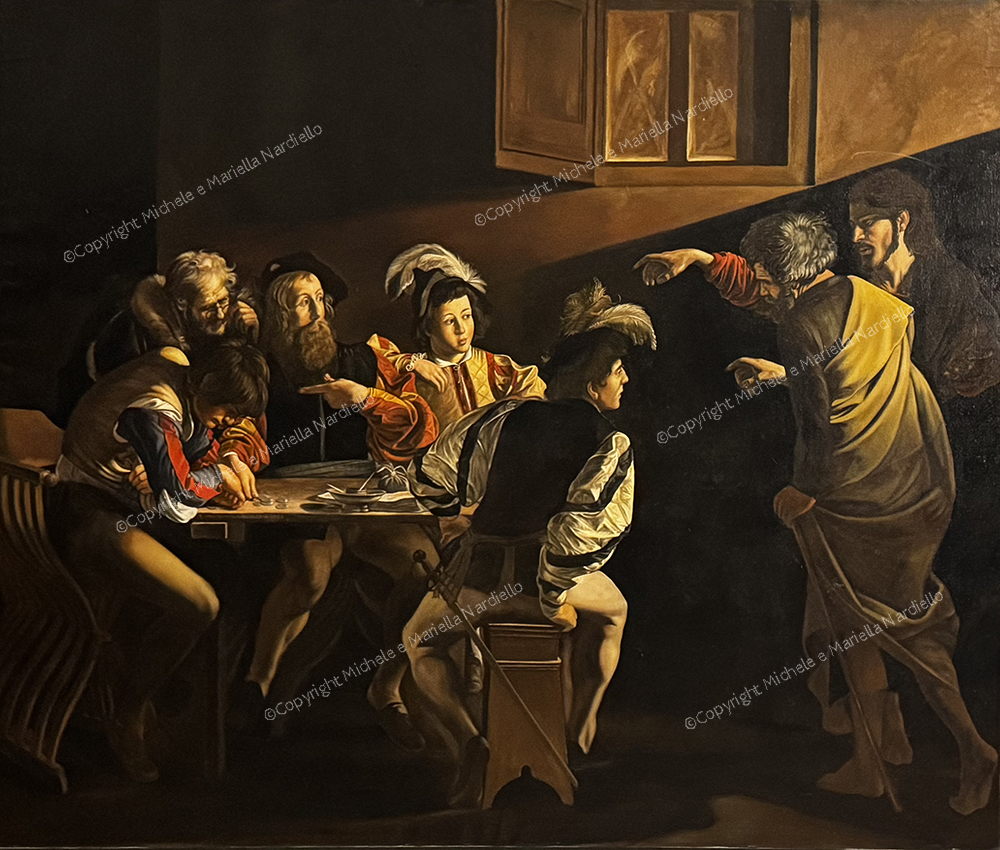
La copia di la chiamata di san matteo di michele nardiello è un quadro a olio su tela che ritrae, con forte immediatezza e realismo, l’episodio evangelico della vocazione di matteo.
Soggetto e scena: l’opera riproduce una scena ambientata in un interno buio e spoglio – probabilmente una taverna o un ufficio di esattore. a destra, si vedono cristo e san pietro (quest’ultimo spesso parzialmente visibile), vestiti in modo atemporale. a sinistra, attorno a un tavolo, sono seduti matteo, l’uomo barbuto che si indica con stupore e altri quattro personaggi vestiti all’epoca della fine del cinquecento.
Azione: il fulcro della scena è il gesto della mano di cristo che indica matteo, un gesto potente che irrompe nella quotidianità dei personaggi. matteo, colto di sorpresa, risponde con un’espressione di sbigottimento, indicando sé stesso con il dito.
Stile e luce: il dipinto è dominato dall’uso rivoluzionario del tenebrismo, una lama di luce proveniente da una fonte esterna (in alto a destra), attraversa diagonalmente la stanza, illuminando i volti, le mani dei personaggi e in particolare il volto di matteo. la copia ha replicato questo intenso chiaroscuro che modella i volumi e isola i protagonisti dallo sfondo altrimenti immerso nell’ombra.
Contrasti: la riproduzione di michele nardiello mette in risalto il forte contrasto tra l’immobilità e la sacralità di cristo e pietro e il movimento realistico, quasi fotografico, dei gabellieri.
michele nardiello’s copy of the calling of saint matthew is an oil on canvas painting that portrays, with striking immediacy and realism, the gospel episode of the calling of matthew.
Subject and scene: the work depicts a scene set in a dark, bare interior—probably a tavern or a tax collector’s office. on the right, christ and saint peter (the latter often partially visible) are seen, dressed in timeless attire. on the left, seated around a table are matthew, the bearded man pointing at himself in astonishment, and four other figures dressed in late-16th-century attire.
Action: the fulcrum of the scene is christ’s hand pointing at matthew, a powerful gesture that disrupts the characters’ everyday lives. matthew, taken by surprise, responds with an expression of astonishment, pointing to himself.
Style and light: the painting is dominated by the revolutionary use of tenebrism, a blade of light from an external source (top right) diagonally crossing the room, illuminating the faces and hands of the figures, and especially matthew. the copy replicates this intense chiaroscuro, which shapes the volumes and isolates the protagonists from the otherwise shadowed background.
Contrasts: michele nardiello’s reproduction highlights the stark contrast between the stillness and sacredness of christ and peter and the realistic, almost photographic, movement of the tax collectors.